Why Background Verification is a Safety Net for Everyone, Not Just Employers
What Exactly is Background Verification?
The Simple Definition and How It Works
At its core, background verification is the modern way of fact-checking. It's the process of taking the information a person shares about themselves—like where they went to school, where they worked, or their identity—and making sure it's accurate. You'll see this process used when companies hire new people, landlords screen tenants, banks approve loans, or organizations need to follow specific regulations. It works by pulling data from different places, like public records, schools, and digital databases, and having authorized agencies confirm it.
Think of it as a gatekeeper for trust. Just like you'd want a security guard to check a badge before letting someone into a building, background verification checks a person's credentials before letting them into a company or a community. It confirms that what someone tells you is true and can be verified. Without this step, we'd have to take everyone at their word, which opens the door to unnecessary risk. These days, the process covers everything from confirming an address to checking employment history and criminal records. All these can be done precisely by partnering with Background Check Company In India. Thanks to technology, what used to be a slow, manual task is now often automated, making it faster and more reliable.
Different Types of Background Checks
Not all checks are the same. There are several types of background verification services, each designed to look into a specific area of a person's past. These include confirming past jobs (employment verification), validating degrees (education verification), searching for legal issues (criminal record checks), confirming a person's name and address (identity verification), and reviewing financial responsibility (credit history checks).
For example, if someone is applying for a job as a driver, the company will likely focus on their license history. For a job in finance, a credit check might be more important. By combining these different checks, organizations get a complete and honest picture of a person. This layered approach helps avoid mistakes and builds a stronger foundation of trust.
The Growth of Background Verification in 2025
Market Size and Global Trends
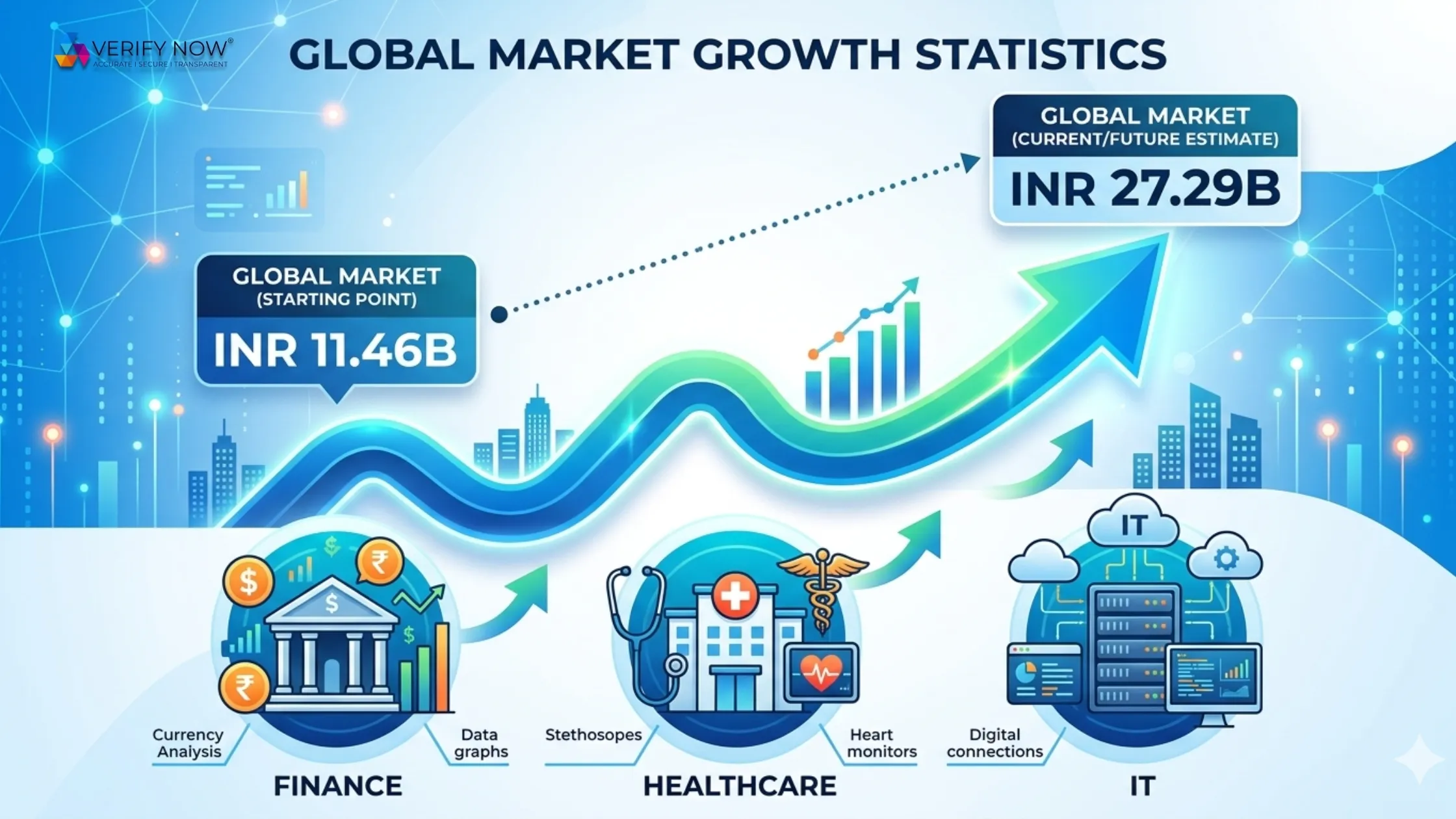
The need for trust is growing fast. In 2025, the global online background check market is worth an estimated INR 11.46 billion and is expected to jump to INR 27.29 billion by 2032. That's a growth rate of over 13% each year. This big jump shows that more and more industries are relying on verification to make safe decisions.
A huge part of this market—about 62.18%—comes from employment verification, which tells us that companies really want to be sure about who they're hiring. The shift to remote work has also played a big role. Now that companies hire people from all over the world, it's harder to verify a candidate the old-fashioned way. That's why digital tools and automated systems are quickly becoming the new standard.
How Many Employers Are Doing Checks?
It's now standard practice. Studies show that between 93% and 95% of employers run some form of background check before making a hire. Another interesting stat is that 60% of companies do these checks consistently for almost every position they fill. It's not just for top-level executives anymore; it's for everyone. The main reason is simple: companies want to avoid the headache and danger of hiring someone who isn't honest about their past or their skills. In a competitive job market, verification has become a necessary step for safety and peace of mind.
Why is Background Verification So Important?
Stopping Problems Before They Start
The main goal of a background verification check is to prevent problems. Without it, companies are vulnerable to things like internal theft, data leaks, and even lawsuits. Running a check helps spot these potential issues before a person is ever brought on board.
Imagine hiring someone for a job they aren't qualified for because they lied about their degree. That could lead to poor work quality and lost money. This risk is even bigger in fields like healthcare or banking, where mistakes can have serious consequences. By doing a simple check, you make sure only the right people get into important roles. It also helps keep the workplace safer. With reports showing a rise in workplace incidents, background checks act as a crucial first line of defense.
Catching Fraud Early
Let's be real: lying on a resume is more common than you'd think. In fact, over 42 million people have admitted to stretching the truth on their resumes at least once. That's a lot of people. Background verification is the tool that catches these discrepancies, while fraud prevention services add an extra layer of protection. They compare what a candidate claims with what official records show, and if something doesn't match up, it raises a red flag.
This process doesn't just protect the company; it also protects honest job seekers. If there was no verification, people who lie would have an unfair advantage over those who tell the truth.
How Background Verification Protects Companies
Making Sure Hires Are the Right Fit
It's easy to be impressed by someone in an interview, but background verification helps you look past the conversation and see the facts. By validating a candidate's history, companies can make hiring decisions based on truth, not just charm. This leads to better hires, which means employees perform better and stay longer. When you know your team's background checks out, you can trust their skills and build a stable, reliable workforce.
Staying on the Right Side of the Law
In many industries, doing a background check isn't just smart—it's the law. For example, banks and financial firms are required to verify employees to prevent fraud. If they skip this step, they can face heavy fines. It also protects a company legally. If an employee causes harm and it turns out the company never checked their background, the organization could be held responsible. So, verification acts as a legal shield.
How Background Verification Protects Employees
Creating a Safer Workplace
When a company does thorough employee background verification checks, it creates a safer environment for everyone already working there. It helps filter out people who might bring a history of violence or misconduct into the office. Employees deserve to work in a place where they feel secure. Workplace safety isn't just a company policy; it's a shared benefit that makes the whole team feel protected and able to focus on their jobs.
Leveling the Playing Field
Good hires happen when everyone is judged fairly. Background verification makes sure that all candidates are evaluated based on real, accurate information. It stops people from getting ahead by making false claims. This creates equal opportunities, ensuring that honest applicants aren't overlooked in favor of someone who simply had better lies on their resume. It makes the whole hiring process more transparent and fair.
How Background Verification Protects Society
Helping Lower Crime
On a larger scale, background verification helps make our communities safer. By keeping people with violent or harmful pasts out of sensitive jobs—like working with children in schools or with vulnerable patients in healthcare—it reduces the chance of harm. It acts as a barrier, ensuring that positions of trust are held by people who are qualified and safe, which contributes to a healthier society overall.
Building Trust in Our Institutions
Trust is the foundation of any good relationship, whether it's with your bank, your doctor, or your child's school. When organizations follow strict verification processes, it builds confidence. People feel better knowing that the institutions they rely on are careful about who they hire. In a digital world where fake identities are a real threat, background verification is what helps maintain that essential trust.
Statistics That Show the Real Impact
The Truth About Resume Fraud
Here's a quick look at the numbers that matter:
- People lying on resumes: Over 42 million people have admitted to doing it.
- Employers checking: Between 93% and 95% of companies now run background checks.
- Regular checks: 60% of employers make it a routine part of their hiring.
These figures show just how common dishonesty can be and why background verification is so important.
What the Data Says About Employers
The industry itself is booming:
- Current market size (2025): INR 11.46 billion.
- Future market size (2032): INR 27.29 billion.
- Biggest need: Employment verification makes up over 62% of the market.
This data proves that verification is not a passing trend—it's a growing industry that businesses are relying on more and more.
Background Verification in India
How It's Being Adopted
In India, background verification is quickly becoming a normal part of business. Companies are using it more and more to cut down on hiring risks and stay compliant with regulations, often partnering with a BGV company in India for reliable checks. The rise of online hiring platforms has made this even more common.
How Different Industries Use It
Each industry uses verification a little differently. An IT company might want to double-check past jobs and technical skills, while a bank is more interested in credit history and criminal records. Hospitals and clinics need to verify medical licenses to ensure patient safety, often relying on BGV agencies in India for accurate verification. Every use case shows the same thing: verification is key to keeping professional standards high.
New Technologies in Background Verification
The Role of AI and Automation
Modern background verification is powered by smart technology. Artificial Intelligence (AI) and automation can scan through huge amounts of data in seconds, finding patterns and spotting potential risks much faster than a human could. This cuts down on manual work and makes the whole process more accurate and efficient.
Moving to the Cloud
Cloud-based systems are now the standard. In 2025, about 71% of the market uses cloud-based screening. This shift to the cloud allows for real-time checks from anywhere in the world. It's fast, it's accessible, and it lets companies verify candidates no matter where they live, without any delays.
The Challenges of Background Verification
Worries About Privacy
One of the biggest challenges is balancing safety with privacy. Collecting and storing personal information always comes with a risk of data breaches or misuse. It's crucial for organizations to follow privacy laws and handle personal data carefully. Finding that balance between thorough verification and respecting someone's privacy is a delicate but necessary task.
The Need for Accurate Data
A check is only as good as the data it's based on. If the information in a database is old or just plain wrong, it can lead to a good candidate being unfairly rejected. That's why verification systems need to rely on sources that are regularly updated. Without accurate data, the whole process loses its value.
The Future of Background Verification
Digital IDs Are Coming
The next step for the industry is digital identity verification. Imagine using biometric data like fingerprints or secure digital IDs to confirm who someone is instantly. This would mean no more waiting for manual checks, faster hiring, and a much smoother experience for everyone.
Watching for Changes Over Time
Instead of just doing a one-time check before hiring, companies are starting to look at continuous monitoring. This means keeping an eye on employee records even after they're hired. If something changes—like a new criminal charge or a lapsed license—the company finds out right away. It's an extra layer of security that helps manage risk in real time.
Final Word
Background verification is about much more than just protecting a company's bottom line. It's about creating a safer world for employees, building trust with customers, and contributing to a more honest society. By checking facts and reducing risks, it builds a foundation of transparency that we all benefit from. With technology making it faster and easier, verification will only become more important in our daily lives.

Stop guessing, start knowing. Schedule a demo with Verify Now to see how easy hiring with confidence can be.
FAQs
.jpg "verify now Dashboard")